I am especially happy about the outcome for two reasons:
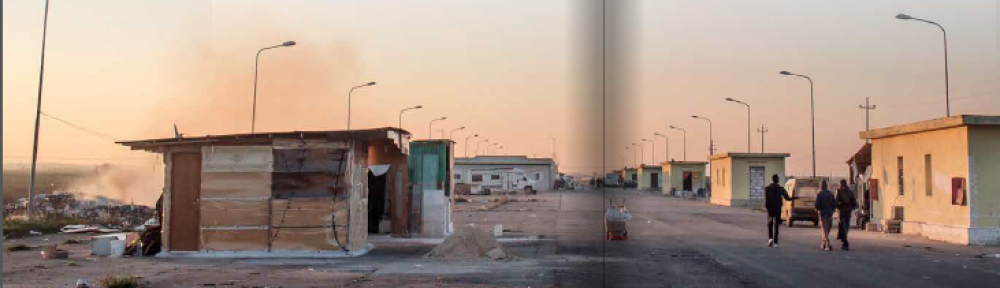
(1) the article allows me to propose an infrastructural perspective on bordering processes that foregrounds their stratifying and racialising dynamics. Taking the example of migrant ‘ghettos’ – or informal labour camps – and partially based on my joint work with MIC|C in Southern Italy, I intend to highlight the dynamic entanglements that underpin their social and material reproduction.
(2) The article follows at least two contributions in the Geopolticis journal that have caught my attention – and with which directly relate to the argument I make. One, directed by Ida Vammen and colleagues, focuses on the securitization of the EU-African border space, and the other, directed by Umut Ozguc and Andrew Burridge, focuses on more-than-human borders. Both propose a new research agenda, which coincide very well with the infrastructural lens I am proposing in the article. Looking forward to discuss more…
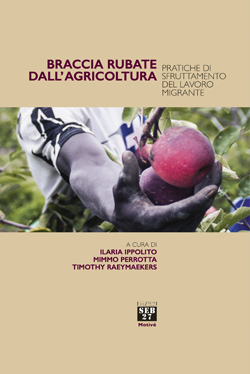
I am proud to announce my first Italian book with colleagues Ilaria Ippolito and Mimmo Perrotta: ‘Braccia rubate dall’agricoltura: Pratiche di sfruttamento del lavoro migrante’. The collection, published with SEB27, addresses the plight of migrant labourers in Italy’s regional agricultural supply chains, from Puglia to Piemonte. Different chapters emphasize the systemic linkages between repressive laws, retail monopolies and geographic marginalization, which have become a structural feature of migrant exploitation. I am grateful towards the Swiss Network for International Studies, which generously funded the New Plantations project I directed in 2015-2017. The Piemonte and Basilicata research are both outcomes of that research project.
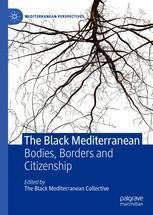
I am happy to announce the publication of the Black Mediterranean: Bodies, Borders and Citizenship. In collaboration with Black History Month, we (the is: a collective of scholars called the Black Mediterranean Collective) launched the edited volume at NYU, Florence, earlier this month. The volume is the result of an intense collaboration across disciplinary and professional boundaries. Reaching beyond the tropes of humanitarian emergency and border security, we seek to rethink the contemporary migrant crisis in the Central Mediterranean by foregrounding questions of race and Blackness. In so doing, the Black Mediterranean Collective aims to capture the long histories of racial subordination and resistance in the Mediterranean region, while at the same time opening a space for radical reconsideration and change.
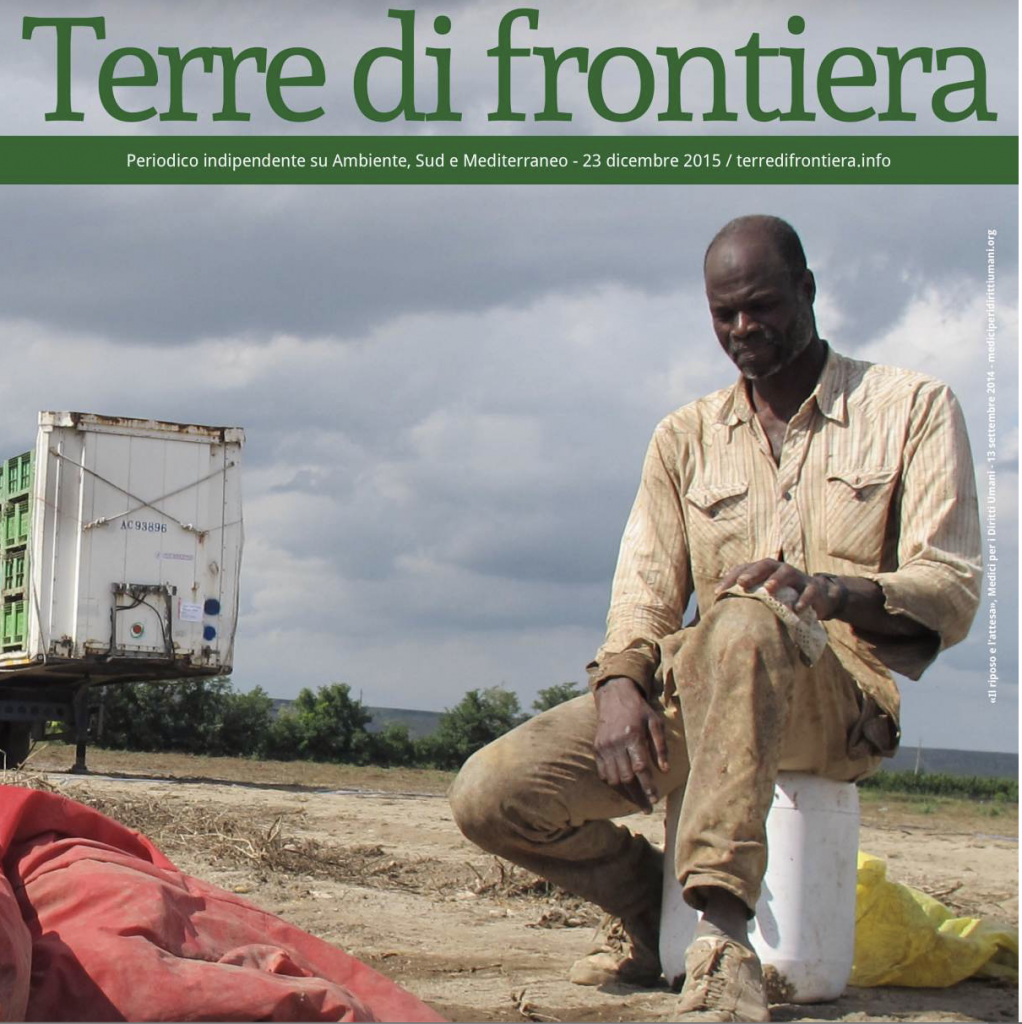
Terre di Frontiera involves a collaborative investigation to tell the story of the Ghetto la Felandina (Bernalda) and the exploitation of migrants labour in Basilicata from the point of view of migrant workers and activists.
Another tragedy has affected African labourers in Italy’s plains this month. On 6 March, bulldozers demolished the San Ferdinando workers’ ghetto, located in the centre of Calabria’s orange plantations and Calabria’s Ndrangheta organized crime stronghold. The ghetto, which has claimed the lives of three people over the last year, had become a thorn in the eye of Italy’s Interior Minister, Matteo Salvini, who has ordered the erection of a tent camp as well as a restoration of public order in the area.
In 2011 the research team Bitter Oranges recorded living conditions in San Ferdinando in this video.
The eviction of San Ferdinando (close to Rosarno, which has been termed one of Italy’s new slavery sites) forms part of Italy’s interior minister’s promise to move “from words to actions.” Matteo Salvini is also the head of the right populist League party, whose members are currently establishing an institutional alliance with the European Far Right. Since his election he has repeatedly declared his intention to “raze to the ground” Italy’s shantytowns, including Rom and refugee settlements. Over the last year, more than a dozen such camps have been demolished, including the Baobab Experience in Rome, which hosted over hundreds of refugees and asylum seekers, as well as various Sinti and Rom settlements around Turin, Pisa and the Italian capital.
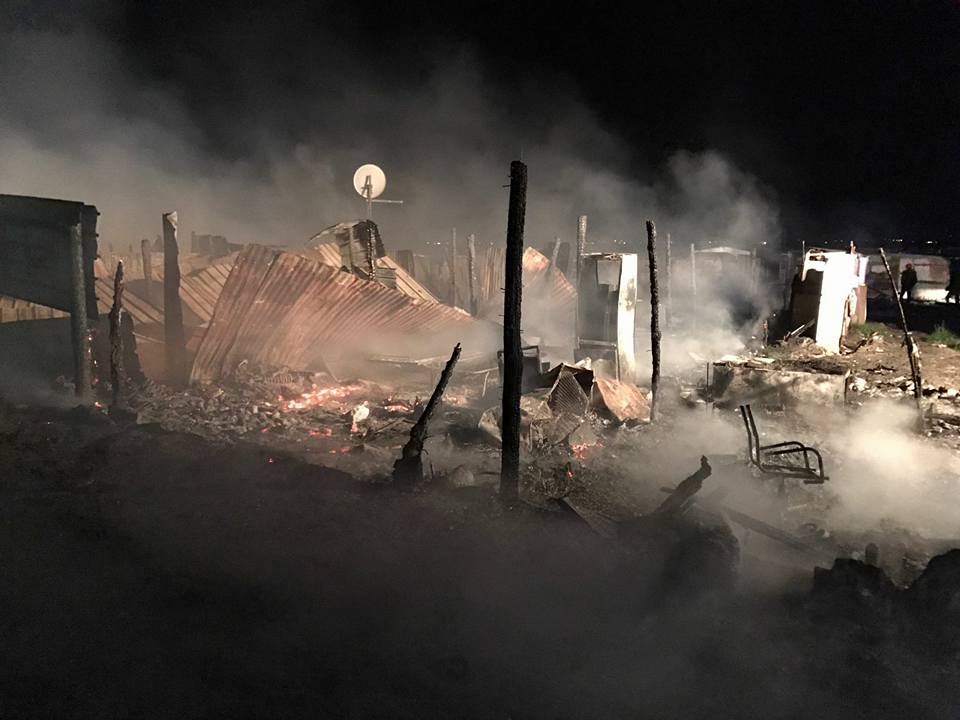
The official motivation for the eviction has been one of insecurity and a lack human dignity. But the Caritas settlement does not appears to offer much of an alternative. On 22 March, another person died in its tent camp situated only a few meters away from the old ghetto. The victim’s name is Sylla Nouma, a man in his thirties. “We hoped not to deplore situations like this any more,” the mayor Andrea Tripodi declared to the press. “It was an unexpected tragedy,” Vincenzo Alampi, the local Caritas director added. Although the causes of the fire are still be ascertained, a possible reason might have been a short circuit departing form the electric wires located in the corner of the tent.
The government-directed evictions, which Matteo Salvini systematically calls “appointments with legality”, particularly appear to target precarious workers’ settlements located in the heart of Southern Italy’s vegetable and fruit plantations nowadays. After the forced eviction of Rignano Garganico and Boreano last year (both situated in the tomato districts of Foggia and the Alto Bradano), the bulldozers have started moving to the South now. Last May local authorities destroyed the informal labour settlement of Campobello di Mazara, in Sicily –leaving workers no choice but to occupy new buildings: while 128 inhabitants were haphazardly hosted in a camp managed by the Red Cross, others have started to erect smaller settlements in the periphery of neighbouring Castelveltrano, in the heart of Sicily’s olive plantations. A similar fate now awaits San Ferdinando’s settlers. At the time of the eviction, the local prefect estimated the number of slum residents at 1.592 people, according to the Repubblica newspaper. While 200 were immediately transferred to official migrant reception centres, around 900 found temporary accommodation a new tent camp managed by Caritas. Local authorities have announced 30 housing units to accommodate future migrants coming to the area. But the mayor has repeatedly warned against housing migrants without also providing for local residents in this area stricken by poverty and criminality. In the meantime, the Interior Ministry has promised 350.000 euro’s to “restore liveability” in the area of San Ferdinando.
The official motivation for the eviction has been one of insecurity and a lack human dignity. But the Caritas settlement does not appears to offer much of an alternative. On 22 March, another person died in its tent camp situated only a few meters away from the old ghetto. The victim’s name is Sylla Nouma, a man in his thirties. “We hoped not to deplore situations like this any more,” the mayor Andrea Tripodi declared to the press. “It was an unexpected tragedy,” Vincenzo Alampi, the local Caritas director added. Although the causes of the fire are still be ascertained, a possible reason might have been a short circuit departing form the electric wires located in the corner of the tent.
An unexpected tragedy? Fire in Rignano Garganico January 2017
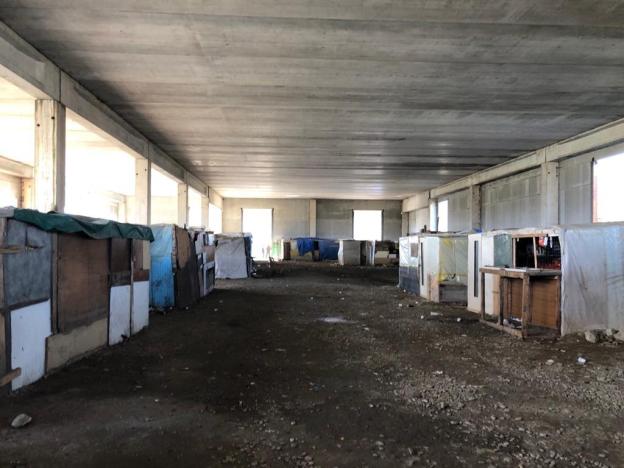
Because of pervasive uncertainty and a lack of consideration by official policies, more and more migrants now have started to move to other vegetable and fruit plantations in the area. Last month, some West African migrants already found refuge in a previous industrial plant in the plains of Metaponto, in neighbouring Basilicata, where the strawberry harvest is currently happening at full speed. Local associations are currently assisting the squatters with social and health services in the absence of official lodging facilities. Most likely, the slum will experience the same fate in a couple of months, when strawberries will have been picked, and the tomato planting season will begin once again in Foggia and Basilicata.
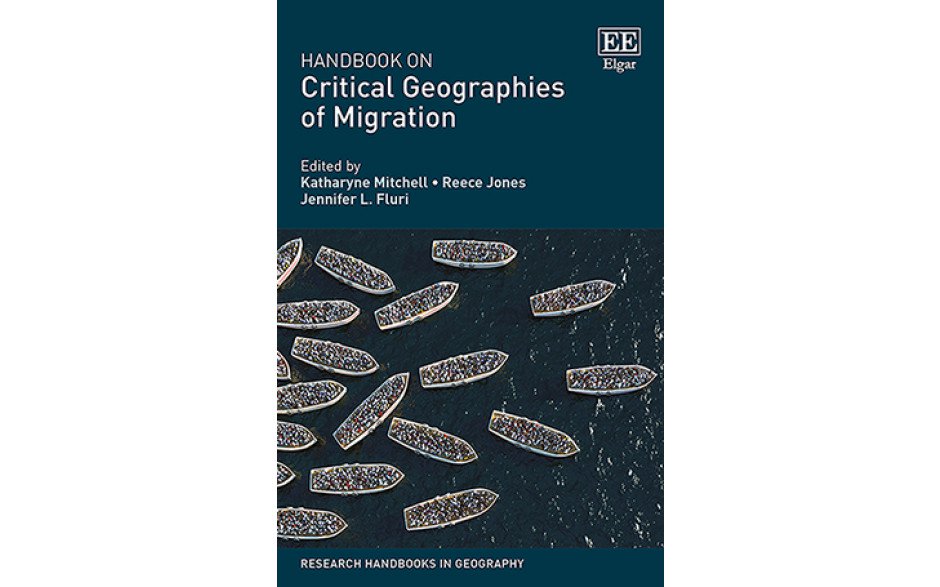
The book, which comes at a significant time, offers an exciting and original analysis of critical research on the theme of migration, drawing on cutting-edge theories from an interdisciplinary and international group of leading scholars. With a focus on spatial analysis and geographical context, the volume highlights a range of theoretical, methodological and regional approaches to migration research, while remaining attuned to the underlying politics that bring critical scholars together.
The online version will be added within two weeks of publication. After that you will be able to link to the whole book or individual chapters, while front matter and introductory chapters are already free to access. The publisher has been so kind to allow faculty and students at institutions that have purchased the relevant e-book collection on Elgaronline to gain immediate access through this link. Furthermore, Elgaronline facilitates full text discovery alongside journals in many libraries and provides multiuser access allowing instructors to use chapters in online course packs.
MigrArtiFilm festival 2017 has decided to grant the ‘best director’ award to JULULU during the 74th Venice Film Festival. Jululu is described as a “musical journey in a corner of Africa situated in Southern Italy”, which brings us to the problems of farm labourers in the region of Puglia.
The shortfilm, which was born from an idea of Sestilia Pelicano and Yvan Sagnet, was produced by Lazy Film. The photography is by Stefano Usberghi and directed by Michele Cinque. The storyboard comes from the dual perspective of Yvan Sagnet and Badara Seck.
Badara Seck is a Senegalese musician and griot, who navigates the Italian farmlands in search of Jululu, the African collective soul. To end up in one of the ghettos where immigrant agricultural workers live during the harvest season.
Yvan Sagnet is an important exponent of migrant labourers’ revolts in Italy. His movie gets awarded two months after the SABR trial, issued by the Court of Lecce on 12 July, which -thanks to the key witness of Sagnet – condemned in the first instance gangmasters and agricultural entrepreneurs, which had been denounced during the 2011 revolt at Bonardi’s farm in Nardo.
At the same time, migrant labour conditions have for from improved, and ghettos continue to spring up in the fields of Puglia, Basilicata and Calabria -despite the frequent destruction that has been repeatedly reported on these pages. Notably in Rignano, where regional authorities have eradicated the informal settlement, which hosted over 2000 labourers during the Summer months, a new ghetto has arisen, this time in the form of a ‘camping’. Commenting the release of a recent report by the syndicate FLAI-CGIL, president Giovanni Mininini says that “substantially nothing has changed” in the way labourers get recruited and subjected to exploitation in this hidden corner of Southern Italy.
A bit late in the day maybe, but I just came across this interesting web entry from Cultural Anthropology about the Refugees and the crisis of Europe -with contributions from Didier Fassin, Cristiana Giordano and Miriam Ticktin, amongst others. Each essay is accompanied by an image from End of Dreams, an installation and photo project by Nikolaj Bendix Skyum Larsen.


 At the same time, migrant labour conditions have for from improved, and ghettos continue to spring up in the fields of Puglia, Basilicata and Calabria -despite the frequent destruction that has been repeatedly reported on these pages. Notably in Rignano, where regional authorities have eradicated the informal settlement, which hosted over 2000 labourers during the Summer months, a new ghetto has arisen, this time in the form of a ‘camping’. Commenting the release of a recent report by the syndicate FLAI-CGIL, president